clgbq

Marco Rubio: U.S. Expects Rwandan Troops to Begin Withdrawing from DRC by Mid-July

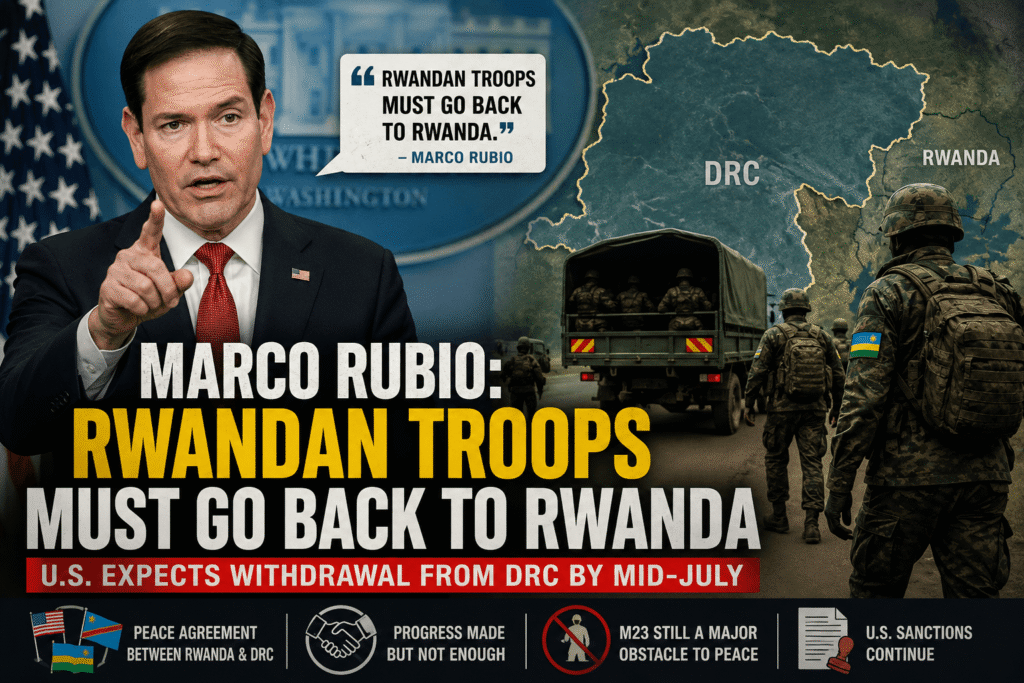
Marco Rubio: U.S. Expects Rwandan Troops to Begin Withdrawing from DRC by Mid-July Washington Says Progress Is Being Made, But M23 Remains a Major Challenge U.S. Secretary of State Marco Rubio has said that the United States expects Rwandan troops to begin withdrawing from eastern Democratic Republic of the Congo (DRC) by mid-July, as part of efforts to implement the peace agreement signed between Rwanda and the DRC. Speaking before the U.S. House Foreign Affairs Committee, Rubio acknowledged that some progress had been made but warned that key aspects of the agreement were still not being fully respected. “As for the DRC and Rwanda, they signed a peace agreement. Unfortunately, it is not being well respected. We had to impose some sanctions,” Rubio told lawmakers. “On the Rwandan side, we are starting to observe a certain respect for the agreement. Things are moving forward—not fast enough, certainly, but we hope that the withdrawal of Rwandan troops from the region will take effect by mid-next month. Of course, the M23 issue remains to be resolved.” New U.S. Sanctions Rubio’s remarks came shortly after the U.S. Treasury Department announced new sanctions against John Imani Nzenze, identified as M23’s intelligence chief, and Gustave Kubwayo, a senior commander of the Democratic Forces for the Liberation of Rwanda (FDLR). Washington accuses both men of leading armed groups involved in destabilizing eastern Congo. The sanctions form part of a broader U.S. strategy aimed at enforcing the Washington Peace Accords signed between Rwanda and the DRC in December 2025. More Pressure on Key Actors In recent months, the United States has expanded sanctions against several individuals linked to the conflict. In April, former Congolese President Joseph Kabila was sanctioned over allegations that he provided financial and political support to M23 and its political ally, the AFC coalition. The U.S. also maintains sanctions against AFC leader Corneille Nangaa and M23 military commander Sultani Makenga, accusing them of directing military operations against the Congolese government. Earlier this year, Washington further increased pressure by sanctioning senior officers of the Rwanda Defence Force (RDF), alleging that they provided military, logistical, and financial support to M23 operations in eastern Congo. M23 Still a Major Obstacle Despite signs of progress in the peace process, Rubio stressed that the M23 issue remains unresolved. The armed group continues to control large parts of North and South Kivu provinces, including the strategic cities of Goma and Bukavu. The conflict has displaced millions of civilians, disrupted trade routes, and contributed to one of the world’s most severe humanitarian crises. A Diplomatic Victory for Kinshasa? Analysts say that if Rwandan troops begin withdrawing from eastern Congo, it would represent a significant diplomatic achievement for the Congolese government. However, they caution that lasting peace will depend not only on troop withdrawals but also on whether M23 relinquishes control of occupied territories and whether all armed groups operating in the region are effectively neutralized. While Washington believes progress is being made, Rubio’s comments highlight the considerable challenges that remain before a durable peace can be achieved in eastern Congo. — Article prepared by Nation Radio TV.

Marco Rubio: U.S. Expects Rwandan Troops to Begin Withdrawing from DRC by Mid-July Read More »

IS IT TRUE THAT FPR-DMI-NISS MONITORS THE PHONES OF ALL RWANDANS?

As technology continues to advance worldwide, concerns about the security of information stored on mobile phones and other digital devices have become increasingly important. In Rwanda and abroad, there are recurring claims that security and intelligence agencies may monitor or intercept citizens’ communications. But are these claims true? Is there concrete evidence showing that large numbers of Rwandans are being monitored through their mobile phones? And what can individuals do to protect their private information? What Some Reports Claim Various reports published by international organizations that advocate for human rights and digital freedoms have raised concerns about the use of spyware in different countries around the world. There is also an article published by The Rwandan that discusses allegations that certain security agencies may use surveillance software to monitor individuals. However, these allegations have not been definitively proven or disproven and would require technical evidence and independent verification. Is It Possible for a Phone to Be Monitored? Yes. Cybersecurity experts agree that, from a technical perspective, mobile phones and computers can be compromised by cybercriminals or entities with access to sophisticated surveillance tools. However, monitoring every individual citizen would require significant financial, technical, and human resources, making large-scale surveillance difficult to implement. For this reason, experts generally explain that surveillance activities tend to focus on specific individuals or groups considered to possess sensitive information or to be involved in particular activities. How Can You Protect Your Phone?   1. Use a Strong Password Avoid simple passwords such as “1234” or your date of birth. Use a long PIN or a strong password. 2. Enable Two-Factor Authentication (2FA) This provides an additional layer of security, making it more difficult for unauthorized individuals to access your accounts. 3. Regularly Update Your Phone and Applications Software updates often fix security vulnerabilities that could otherwise be exploited. 4. Avoid Suspicious Links Do not click on messages or emails from unknown sources, as they may contain malware or spyware designed to compromise your device. 5. Use Trusted Devices and Applications Download applications only from the Google Play Store or the Apple App Store. Whenever possible, use trusted devices such as iPhones, Samsung smartphones, and other modern devices that receive regular security updates. 6. Secure Your Data Use encryption and backup solutions to protect your information from unauthorized access or accidental loss. 7. Check for Call Forwarding Call forwarding can sometimes be used to redirect communications without a user’s knowledge. a) How to Check for Call Forwarding Dial: *#21# This code may show whether calls or communications are being forwarded to another number. Dial: *#004# This code can display information regarding all call forwarding settings configured on your device. b) How to Disable Call Forwarding Dial: ##21# This code disables and removes call-forwarding settings that may have been configured on the phone. What If Your Phone Is Stolen? If your phone is stolen: Change passwords for your email and important accounts using another device. Use “Find My iPhone” or “Find My Device” to lock or erase the phone remotely. Contact your bank if financial or mobile banking applications were installed on the device. Suspend your SIM card through your mobile network provider. Conclusion Although discussions about spyware and phone surveillance continue in Rwanda and many other countries, it is important to take proactive steps to secure our devices, as modern life increasingly depends on digital technology. The most important thing for citizens is to protect their personal information, use technology safely, and remain cautious about messages, applications, and online activities that could compromise their security. ▶️ Watch Nation Radio TV’s in-depth analysis of this topic on YouTube. — Article prepared by Nation Radio TV.

IS IT TRUE THAT FPR-DMI-NISS MONITORS THE PHONES OF ALL RWANDANS? Read More »

UK Wins International Arbitration Case Over Rwanda Migration Deal

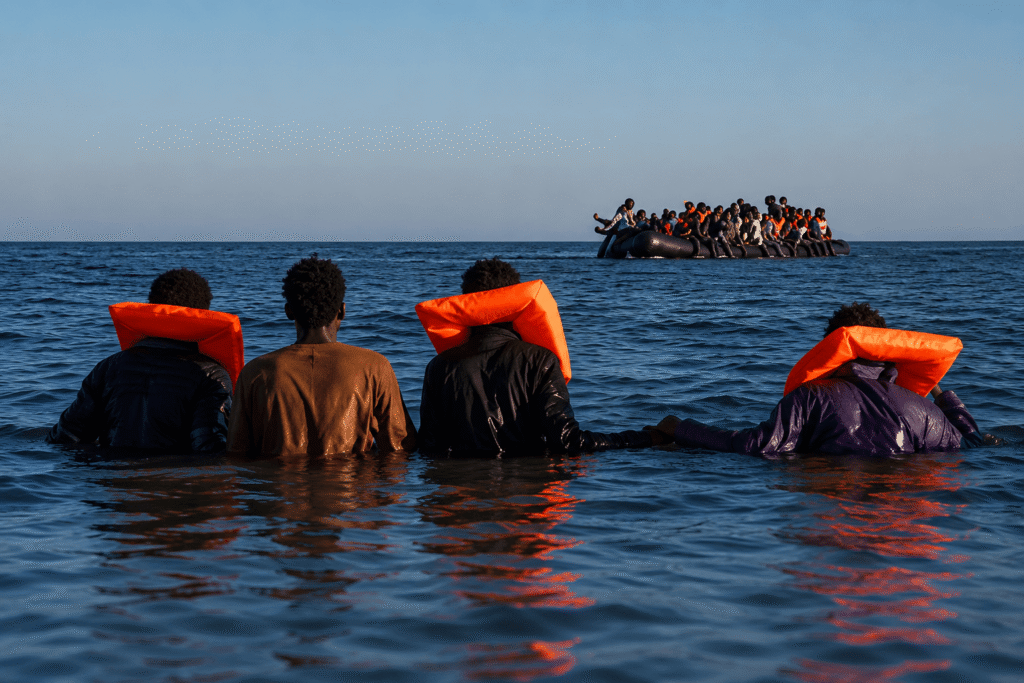
The United Kingdom has won an international arbitration case brought by the Government of Rwanda after Britain terminated a migration agreement that would have allowed certain asylum seekers who entered the UK illegally to be relocated to Rwanda. HOW THE SCHEME WAS DESIGNED In 2022, Rwanda and the United Kingdom signed an agreement under which individuals who entered the UK illegally or applied for asylum after arriving through irregular routes could be transferred to Rwanda, where their asylum claims would be processed and, if approved, they could be resettled. As part of the agreement, the UK committed to supporting Rwanda through the Economic Transformation and Integration Fund (ETIF), which was expected to receive a total of £370 million. Rwanda was also set to receive an additional £120 million once 300 migrants had been relocated, along with £20,000 for each person transferred and support costs of up to £150,874 per individual over five years. Before the programme was cancelled, the UK had already paid Rwanda £290 million. Of this amount, £270 million was allocated to the ETIF, while £20 million was provided for reception and preparation activities related to the relocation programme. The UK government also stated that the overall cost of the scheme had reached approximately £715 million by June 2024. Despite this expenditure, no asylum seeker was forcibly transferred to Rwanda, while only four individuals voluntarily relocated under a separate arrangement. After Prime Minister Keir Starmer’s government cancelled the scheme in 2024, the UK announced that it would not make the remaining scheduled payments. These included £50 million due in April 2025, another £50 million due in April 2026, and £120 million that would only have been paid if 300 migrants had been relocated. As a result, Britain argued that more than £220 million in future payments would no longer be owed. On 24 November 2025, Rwanda filed a case before the Permanent Court of Arbitration (PCA) in The Hague. Kigali argued that a change in political leadership in London should not release the UK from its contractual commitments. Rwanda sought payment of the £50 million due in the second year of the agreement and additional amounts linked to the following year, estimated at either £50 million or £10.4 million, depending on the interpretation of the contract. Rwanda also requested £6 million in damages or compensation because the UK had not implemented a separate commitment to receive vulnerable refugees from Rwanda. However, in a ruling dated 15 May 2026 and publicly released on 1 June 2026, the PCA rejected Rwanda’s claims. The tribunal found that diplomatic exchanges between the two countries in November 2024 demonstrated Rwanda’s acceptance that the outstanding payments would not be made. The court also rejected the claim for £6 million in damages. As a result, the UK prevailed in the arbitration and was not ordered to pay any additional funds to Rwanda. In summary, Rwanda had already received £290 million under the migration partnership. After the scheme was cancelled, Rwanda sought up to £106 million in additional payments, excluding interest. The Hague tribunal rejected all of these claims and ruled that the UK has no further financial obligations under the agreement. THE COURT’S DECISION The tribunal concluded that the UK is not required to make additional payments requested by Rwanda following the cancellation of the migration partnership by Prime Minister Keir Starmer’s government in 2024. Rwanda had argued that Britain breached its commitments under the agreement, which was designed to relocate asylum seekers to Rwanda for processing. During hearings in The Hague, UK lawyers maintained that the policy change following the election justified the cancellation of the scheme and that no additional payments were due. The court agreed with the UK’s position and rejected Rwanda’s compensation claims. Following the ruling, the Rwandan government said it respected the tribunal’s decision and considered the matter concluded. However, it noted that one arbitrator expressed a dissenting opinion, suggesting that some legal issues could have been interpreted differently. WATCH NATION RADIO TV’S FULL ANALYSIS OF THIS CASE (VIDEO) Rwanda’s Minister of Justice and Attorney General, Emmanuel Ugirashebuja, had argued before the tribunal that Rwanda incurred significant costs preparing for the agreement and that the UK had failed to honour its obligations. The scheme was originally launched in 2022 under former Prime Minister Boris Johnson and later supported by Rishi Sunak as part of efforts to deter illegal crossings of the English Channel. The policy, however, faced numerous legal challenges. The first planned deportation flight was halted at the last minute following intervention by the European Court of Human Rights. After cancelling the partnership, the UK introduced a voluntary relocation programme offering rejected asylum seekers up to £3,000 to move to Rwanda. Reports indicate that only four individuals accepted the offer. The British government welcomed the ruling, while critics of the scheme argued that it caused delays and disruption within the asylum system. — Article written by Nation Radio TV.

UK Wins International Arbitration Case Over Rwanda Migration Deal Read More »

Contact

Email

info@nationradio-tv.com

Appelez-nous

+31 6 206 99 903

WhatsApp

+31 6 206 99 903

Social Media

COPYRIGHT © NATION RADIO TV 2024